Wednesday, February 16, 2011

World Cup Special: Men Who Mattered

Change they say is the only constant! Its no different in Cricket than it is elsewhere. Legends must retire for new legends to be born. Most successful international players dream of a World Cup swansong. Some are fortunate to hang their boots with a successful World Cup campaign and some leave after a disappointing first round exits like Rahul Dravid, Sourav Ganguly and Inzamam Ul Haq after the 2007 World Cup. This tournament will see some of the modern day legends of the game playing their last World Cup. Each of these players have played a major role in their team's progress over the last ten years. They have mentored newcomers over the last decade a some have even captained their side for a long or a short while.

Ricky Ponting

Who would have expected the diminutive middle order batsman to go on to be a part of three wWorld Cup winning teams and lead Australia to wins in two of them. A batsman par excellence and a never say die captain. Ricky is the second highest century maker in ODIs and tests next only to Tendulkar. He was made the ODI captain in 2002 and lead Australia to an undefeated World Cup win in 2003. He played a major part in the win as he demolished the Indian bowling in the finals along with Damien Martyn. He scored a masterful 140* which remains one of the best knocks to have been played in a WC final. He lost most of his important personnel after the 2007 WC. He has had to rebuild the team and that has been no mean an achievement. He remains the lynchpin of the Aussie batting line up and will play a crucial role if Australia were to defend the Cup successfully. Veteran of four World Cups, Ricky starts this World Cup second on the overall run-list behind Tendulkar with 1537 runs. He had a terrific 2007 World Cup scoring 539 runs leading Australia to another spectacular World Cup win. 


Jacques Kallis

No less a talent than Ponting or Tendulkar. Kallis, for me, might even be a notch higher than Ponting in terms of contribution to his team. He, in my list, would be counted amongst the two best all rounders ever only behind Sir Garfield Sobers himself. Kallis is almost as effective with the ball as he is with the bat. Made his debut in 1997, Kallis made his presence felt in the World Cup 1999 with his swing bowling and consistent batting. He, for a while, even opened the attack with Pollock to allow Donald to bowl first change. As a batsman, his contribution to the team has been enormous. Playing along with Gary Kirsten, Gibbs, Smith, Cullinan; Kallis made his own mark being the batsman with impeccable technique and someone who relied more on timing and placement than power. Over the years, he may have lost some pace but still is as handy with the ball.

Shivnarine Chanderpaul

Made his debut in 1994 and was a part of the West Indian team that made to the semi finals of the World Cup 1996 and almost made it to the finals at the expense of Australia, but for a lower order collapse. Chanderpaul started off being an understudy to Brian Lara but took over and came on his own in 2001/02 where he performed admirably well against the visiting Indians. He is considered one of the best players of spin amongst players outside of the subcontinent. His free stance allows him to use his feet conveniently. Going by his built and thinking he can't attack would be a mistake. He is capable of accumulating runs at strike rate above 100. He currently is the senior most batsman in the WI team. Him retiring would be a big loss to the already dooming West Indian cricket. He is the last trace of 1990s in West Indian cricket.

Shoaib Akhtar

He clocked the fastest ball to be bowled in World Cups in the 1999 edition. He got Steve Waugh out to one of the most amazing yorkers seen in cricket annals in the same tournament. He was in his mettle in 1999. Troubled batsmen with his pace and brilliant variations. Shoaib Akhtar is one of the senior most members in the Pakistani team. He, Razzaq and Afridi are the only survivors from the 1999 Cup finalist team. Mentored by Wasim Akram and Waqar Younis in his early days, Shoaib today is leading the bowling attack with Umar Gul, Junaid Khan and Wahab Riaz to be mentored and supported by him. A successful campaign this World Cup could be a huge boost for him after a more or less controversy shrouded career he has had. He has shown a lot of character in coming back to play the game after injuries and disciplinary suspensions. He still has the pace and the accuracy to rattle the best in business. He mustn't be taken lightly at all.

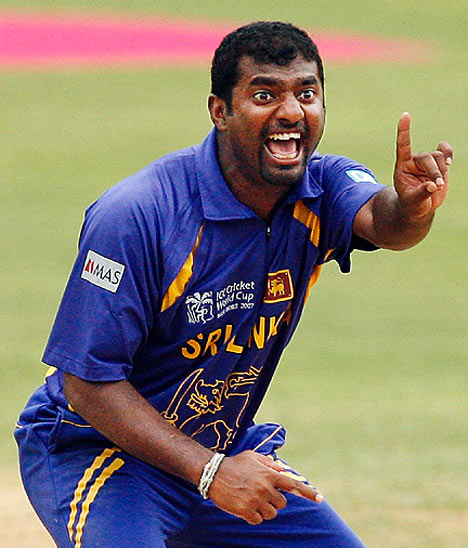
Muttiah Muralitharan

It could be said, Murali had a huge role to play in Sri Lanka winning the 1996 World Cup. Him being called for chucking was taken so personally by Ranatunga, that he motivated his players and rallied them around to form a team that shocked one and all. Murali played a crucial role in the World Cup too. Amongst the best spinners and the greatest characters to have played the game, Murali must be wishing to end his career on a high after a successful retirement from tests last year. He was hugely instrumental in his team reaching the finals of the 2007 edition picking 23 wickets out of his 53 total World Cup wickets. Sri Lanka have Ajantha Mendis and Suraj Randiv replace when Murali's hangs his boots, but no one can fill the void for the great sportsman and ambassador for the game he has been. His detractors will continue to call him a chucker and discredit him for the wickets he has earned. Chucker or not, Murali has changed the meaning of spin bowling since his debut in 1993.

Sachin Tendulkar

He sure needs no introduction. He would walk into every World XI, ODI or Tests. Tendulkar had a phenomenal 1996 and 2003 World Cups. India got to the semi finals in both editions and went upto the finals in the latter. His aggregate 1796 World Cup runs will be hard to match. He has been the backbone of Indian batting for over 20 years now. Debuted in 1989, when some of his current team members were still in their diapers, he has broken every possible record in ODI batting. Most recently came the ODI double hundred at Gwalior last year. Winning the World Cup will be the perfect swansong for him like all others, but the patriot that he is and the passion he has he would want to win it for India than for his own benefit. He found his bearings under the supervision of seniors like Azhar, Srikkanth and Vengsarkar, blossomed playing together with contemporaries like Dravid, Ganguly, Jadeja, Kambli and now is the teacher and role model to new comers such as Kohli, Vijay, Raina and even Sehwag.

Author also writes on http://www.isport.in/

Saturday, February 12, 2011

Asian Giants Chase The World Cup Dream


After 1987 and 1996, this is the third World Cup to be held in the subcontinent. And in both the earlier Cups at least two teams from the subcontinent have made it to the semi finals and on one occasion even won it (Sri Lanka in 1996). Since 1996, at least one team from the sub continent has reached the finals of the Cup only to be beaten convincingly by Australia. Pakistan in 1999, after splendid performances upto the finals played terribly to lose by 9 wickets in the finals to Steve Waugh determined team. India was in ominous in the 2003 edition till the finals, not losing a single game except for their group match loss to Australia. But lost steam and plot to lose the finals by a huge margin. In 2007, Sri Lanka surely didn’t look like the best team to win the cup, yet reached the finals, a spectacular Gilchirst took the game away from them single handedly.


Pakistan as usual don’t come into the World Cup as favourites. They have come in as the most mercurial underdogs. As their captain courageous has been recently quoted, they are “the most dangerous team” this World Cup. The team has a good mix of youth and experience. Bowling attack is lead by the very experienced and fiery Shoaib Akhtar and supported by Umar Gul, Wahab Riaz and less known Junaid Khan. Spin bowling department is headed by the specialist Saeed Ajmal who will be a handful on subcontinent wickets with his nippy offerings. Shahid Afridi and Mohammed Hafeez are expected to bowl a lot on these pitches. Batting looks quite stable, yet vulnerable. A lot will depend on the Akmal brothers, Younis Khan, Misbah if Pakistan are to put up and chase down big totals.

Bangladesh comes into this World Cup more confident than they have ever been. A 4-0 rout of New Zealand must be by far their best achievement in international cricket. Their captain Shaki Al Hasan is in terrific form with both bat and ball. Tamim Iqbal. Imrul Kayes and Shahriar Nafees are the top order batsman the co hosts will depend on. Tamim is expected to flourish on the big stage. He is someone to keep an eye on for the future. Mahmudullah, captain Shakib and Mushfiqur Rahim make for a strong lower middle order. These are batsman who can build as well as score at a quick rate. Bangladesh have recently relied on their slow bowlers to get them the breakthroughs. Razzak, Shakib, Shuvo, Naeem form their slow bowling armoury. Nazmul Hossain and Shafiul Islam are their opening bowlers in the absence of Mashrafe Mortaza. 


This World Cup India certainly is the favourite for the form they have been in over the last year and a half and of course familiarity of conditions and pitches. Lead by Dhoni, India looks a fine unit with a terrific batting line up and without a doubt the most feared opening pair in Sehwag and Tendulkar. Bowling attack is expected to be lead from the front by Zaheer and Harbhajan. Munaf’s task with his accurate line and length would be to cut the flow of runs and contain. Nehra and Sreesanth can leak runs on a bad day, but on a day which is theirs, they possess the ability to run through a team. Indian team’s X-Factor though would be their lower order batting and their spin bowling options. Raina, Yusuf and Kohli are the best batsmen a team can ask for to finish games or set a challenging total. Harbhajan, Ashwin and Chawla have enough variety and talent amongst them to give the captain nightmares to choose whom to play. Backing them up, Sehwag, Raina, Yuvraj too can roll their arm over effectively.

Sri Lanka, with a confident captain in Sangakkara and a promising batting line up figure amongst the favourites in this World Cup. Dilshan, Jayawardena and Sangakkara are the core batsmen the team would depend on. Kapugedara and Tharanga are expected to make to the top five. In Angelo Matthews and Thissira Perera, Sri Lanka have two terrific all rounders. Matthews have more than proved his mettle in recent times with sold bowling and batting performances. Their bowling looks strong with two match winners in Malinga and Muralitharan. Kulasekara, Dilhara Fernando and Ajantha Mendis will fill up the other bowling positions. Angelo Matthews and Mahela Jayawardena will be very crucial to Sri Lankan game plan towards winning the Cup.


I get a very strong feeling this World Cup will come to one of the Asian nations. Bangladesh though will be very happy if they go past the qualifying round into the quarters. This tournament might see the last of one of the best spinners to have played the game, Muttiah Muralitharan. Also would be the last World Cup for the best batsman of our generation and one of the best the game has ever seen, Sachin Tendulkar. There will be many a tribute paid to the legends. But cometh February 19th, once Shakib Al Hasan and MS Dhoni come out for toss at Mirpur, it will be the on field action which will be talked about more than off field trivia and news. And mostly, what happens on the 22 yard strip is what makes the best news.

Sunday, February 6, 2011

India's World Cup Highs - II

India and Pakistan met for the second time in World Cups at the quarter final stage of the 1996 edition. The match was played at Bangalore. There wasn't an inch the two teams could give one another. Wasim Akram, the Pakistani captain backed out of the match at the last moment citing back problems. Aamer Sohail was named the stand in captain. India led by Azharuddin looked good, they had played well in the group stages. Their star batsman Tendulkar was in prime touch and the middle order was scoring too.


 India won the toss and elected to bat. India had an unusually sedate start despite Tendulkar's presence at the crease. He was kept in check by Waqar and Aaqib Javed. India never scored at an alarming rate though Sidhu played well for his fine 93. India would never have reach 287 in their 50 overs but for some clinical slogging by Ajay Jadeja. He thrashed Waqar for 40 runs in his last two overs and scored a brutal 45 off 25 balls. India's total looked good for a win but Pakistani openers had different ideas. Sohail and Anwar come out all guns blazing adding 84 in the first 10 overs. Anwar was dismissed soon after.The most talked about moment of the match is the visual of Sohail challenging Venkatesh Prasad after scoring a boundary off him and the bowler uprooting his off stump. Soon after Sohail dismissal, Pakistan capitulated. With some contributions from the middle order, Pakistan reached 248. India romped home by 39 runs. 

Pakistani players went home to some rioting fans pelting stones at Wasim Akram's house for his absence from match and India went into the semi finals setting up their second showdown against Sri Lanka, the eventual Cup winners. 

Saturday, January 29, 2011

India's World Cup Highs - I

This blog will come up with 5 of India's best World Cup moments since 1992 from here on till the beginning of the ICC World Cup 2011. Benson & Hedges World Cup 1992 in Australia and New Zealand was the first World Cup I watched as a 7 year old.

The 1992 World Cup down under wasnt the best campaign for India. Led by Azharuddin, we had already lost our first two games against England and Australia in closely fought games and the third game against Sri Lanka at Mackay had got rained out. India really needed a win to have a shot at the semi final slot. India's fourth game was against arch rivals Pakistan at Sydney. Pakistan, captained by Imran Khan, too hadnt had the brightest of starts to the World Cup. This was India and Pakistan's first ever encounter in a World Cup game. It was a tense game. It happened in the foreground as political tensions brewed between the two nations.


India batted first and put up a fighting total of 216 thanks to contributions from Jadeja, Azharuddin, Tendulkar and Kapil Dev. Tendulkar scored a fine 54 and was the only one to cross 50 for India. Pakistan's target of 217 wasnt steep but the pressure of expectations were immense. Both teams didnt give each other an inch. Fine bowling by Indians coupled with some nervous batting by Pakistanis resulting in a convincing India win. Barring Aamir Sohail (62) and Javed Miandad (40), no batsman could handle pressure. India registered its first win and Pakistan received a jolt to their World Cup dreams, which they eventually won.

This match was only the beginning of India Pakistan encounters in World Cups. The teams met in the next three consecutive World Cups, all of which India have won.

Wednesday, December 22, 2010

Australia's Next Captain Conundrum


How many full time captains each test playing nation has had in the last decade?
Pakistan - 8, Sri Lanka - 5, England - 5, West Indies - 6, South Africa - 4, India - 5, Australia & New Zealand - 2. Unlike other teams, with the exception of New Zealad, Australia has seen the least number of captaincy changes in the last decade. While New Zealand has had Stephen Fleming & Daniel Vettorri leading the team, Australia has had only two full time captains in this period; Steve Waugh & Ricky Ponting. Adam Gilchrist, Mike Hussey & Micheal Clarke have filled in for them in interims. Australia for that matter, since 1970 have had a long term captain. Starting with Ian Chappell, followed by a short stint of Graham Yallop, Greg Chappell, Kim Hughes, Allan Border, Mark Taylor, Steve Waugh & now Ricky Ponting have upheld the mantle of Australian captaincy.

Australia now are in a transition phase after the retirement of Langer, Hayden, Warne, McGrath, Martyn and Gilchrist. Ricky Ponting too isn't getting younger, his batting form isn't getting any better, his success rate diminishing and retirement thoughts surely would have entered his mind. But the selectors have quite a dilemma ahead of them. The two main contenders for Australia captaincy are Micheal Clarke & Mike Hussey. The latter's age (35) might work against him, but Clarke's form with bat is a crisis in itself.  Not doubting Clarke's talent as a batsman and a fine fielder and utility spinner. But his vulnerability to short balls has been exposed by bowlers around the world. And he surely isn't in the league of all the ex Australia test captains. Mike Hussey sure does seem to have the charisma and is a well respected senior in the team. His title of Mr.Cricket too augurs well for a future Australia captain, but for his age.


If I was an Australian cricket selector, I wouldnt even look towards Clarke. I would either opt for a bowler captain in Mitchell Johnson, already a senior in the team and will ensure he stays focussed for the team benefit or hand it over to Mike Hussey or Brad Haddin for a short period of two years and ensure either of Cameron White or Callum Ferguson trained under them as vice captains. I feel Callum Ferguson is someone with enormous potential and is a player to watch out for in the future.

Author of this post also writes on http://www.isport.in/

Monday, December 13, 2010

India's African Safari

Till not so long ago India, not-so-proudly held the tag of "poor tourists". And in that period, till 2007, amongst other countries, India toured South Africa four times and played 12 test matches; won 1, lost 6 and drew 5. A record that doesn't really befit a team which sits atop the Test rankings.


South African pitches offers Indian batsmen what they arent too comfortable with; the twin troubles of Pace & Bounce. Indian batsmen have traditionally suffered at the hands of South African bowlers in these pitches assisting pace and bounce. Even the mighty Sachin Tendulkar has looked a mere mortal in South African conditions. With three centuries in 12 test matches, South African bowlers have offered him the least to get away with in their backyard. Even Dravid, Laxman & Sehwag havent struck gold against the Proteas. But things might be slightly different this time around. India have a settled opening combination in Gambhir & Sehwag for the first time in all their tours to SA. A middle order which has three legends. A wicket keeper batsman & captain who can more than just bat. Two promising youngsters, Raina & Pujara, battling for the sixth batsman spot. Its Steyn, Morne Morkel & the less known Lonwabo Tsotsobe they'd need to negotiate. Paul Harris, the Protean spinning option shouldnt pose much of a threat to the Indian batting line up.


Indian bowlers though have been slightly more successful than their bat wielding team mates. Prasad & Srinath were a deadly combo during the 1996-97 tour. Sreesanth was lethal & Zaheer supported him well in the 2006-07 tour. But what these bowlers lacked was support from rest of the bowlers and batsmen. The pressure exerted by Prasad & Srinath was usually undone by the third seamer who let the Proteas counter attack and take runs before the pair came back to hunt. India this time has Zaheer in prime form, Ishant and Sreesanth finding rhythm and Harbhajan not in the wiliest of phases. But Sreesanth is a mercurial bowlers and can find rhythm in one good spell and once he does he can be dangerous. Zaheer will bank getting his bunny Graeme Smith cheaply consistently. Trouble is when they run into the Protean middle order, next only to Indian middle order if not equal. AB de Villiers, Kallis & Amla are all in sublime form and are determined to go into the World Cup with victory against India.

This series will be watched by all cricket enthusiasts for its between the two most successful teams in recent times. With the one sidedness of The Ashes, the significance of India versus South Africa has increased multi folds in the context of the game. India has no reason to not feel confident about their chances. They have achieved success in the bounciest wicket in the world at WACA, Perth against Australia in 2008. To do well and achieve success here will be the best preparation India could ask for before the World Cup and a perfect adieu to Tendulkar, Laxman & Dravid who have traveled thrice to South Africa without achieving a series win and quite certainly are playing their last series in South Africa.

Author of this post also writes on http://www.isport.in/


Saturday, December 11, 2010

Indian Cricket since 1996 - Part 2

World Cup 1999 to World Cup 2003 eve

Pepsi World Cup 1999 in England


India headed for the World Cup with a good team and an experienced captain in Azharuddin. India began its campaign unsuccessfully with a defeat against South Africa, but hit a great low by losing to Zimbabwe in the next game falling prey to some extremely indisciplined bowling, terrible running between the wickets and Tendulkar’s absence from the team. This defeat made the next three group games must win for India. And they did just that. Ganguly & Dravid put up big hundreds to amass a score of 373 for 6 against Sri Lanka. In the super sixes, India faced eventual winners, Australia and lost convincingly despite a fighting hundred by Jadeja and a desperate partnership with Robin Singh. India faced Pakistan in the most awaited clash of the World Cup at a time when the two countries were engaged in a war back home. It was touted to be a high adrenaline match with tempers flaring. But it wasn’t to be, India trounced Pakistan in a relatively low scoring match where Indian bowlers came up trumps. India’s semi final hopes were dashed even before they played their last super six game against New Zealand owing to some funny calculation system adopted by ICC. India lost the match against New Zealand, and thus ended their campaign, where though lot was promised, not much was delivered. Dravid, Ganguly & Srinath were India’s stars from the World Cup. Dravid remained the highest scorers of the tournament.

1999

The unsuccessful World Cup campaign was dealt with severely by the BCCI and Azharuddin was sacked as captain & dropped from the team and Tendulkar was reinstated. Robin Singh was overlooked for he was the oldest member of the team at 36 and selectors looked at nurturing younger talent. India toured Sri Lanka for a tri series involving Australia. Indians played below par in the series and didn’t reach the finals despite Tendulkar’s century in severe back pain in a crucial match. Their next campaign was the Singapore Challenge against Zimbabwe & West Indies. India was crushed by Ricardo Powell who carted bowlers to all corners of the ground in the finals and we eventually lost.  Next up India won the DMC Cup, 2-1, played against West Indies at Toronto as Indian government refused to allow the team to play Pakistan even in a neutral venue due to political tensions. The team here was lead by Ganguly in Tendulkar and Jadeja’s absence. Ajay Jadeja was at the helm for the LG Cup held in Nairobi. India played the round robin games like real champions with unknown faces like Sunil Joshi and Vijay Bharadwaj making valuable contributions. But it was in the finals that India realised how inept we were at handling pressure.

After a more or less disappointing ODI season, India faced New Zealand at home in a three match test series. India won the series 1-0 on perfect featherbeds and dust bowls. The series would only be remembered for Tendulkar's first double century in the second test at Ahmedabad. In the ODI series that followed, India defeated New Zealand 3-2 in games most of which were high scoring. Tendulkar came up with his highest ODI score, 186* and India posted it highest ODI total 376.

This was followed by one of the most disappointing tours India has even been on, the tour down under. India’s morale wasn’t helped by the then secretary of BCCI predicting a 3-0 whitewash. It came true though. Australia blanked India 3-0 in the test series. Indians weren’t allowed to dominate a single session of play in the entire duration of the series. The only high points for India from the series were Tendulkar superb century at Melbourne, Laxman stunning 167 in an attempt to save the Sydney test and of course Tendulkar being adjudged Man of the Series despite his team’s loss. The test series loss affected the psyche of the players and the ODI series involving the hosts and Pakistan was no different. India only managed one win in the 8 matches they played in the series.


2000

South Africa toured India with a strong resolve to avenge their defeat in 1996. Hansie Cronje had put together a strong team, with a terrific batting line up and an equally strong bowling attack. India, for the first time in 13 years lost a home test series. South Africa defeated India 2-0. India had Tendulkar and Azharuddin scoring hundreds, but for South Africa it was their bowling which never let Indians dominate. Allan Donald was at his best, supported by Shaun Pollock and Nicky Boje. In the ODIs that followed India defeated South Africa 3-2 in the five match series. Sachin Tendulkar informed the BCCI that he would like to step down as the captain after the ODI series following two series defeats. The decision was shocking, but seemed to be in the best interest of the team as India really needed him as a batsman. Sourav Ganguly was soon handed over the mantle of captaincy of the Indian cricket team. His first two assignment as a captain were forgettable. The Coca Cola Cup at Sharjah against Pakistan and South Africa and the Asia Cup in Sharjah. India failed to reach the final in both and managed two wins both put together.

All was well with the world of cricket till Hansie Cronje decided to make a confession, a confession that was going to rock Cricket and scar the game.  Cronje, the maverick South African captain, pleaded guilty of accepting money to underperform. Not once, not twice, but on a number of times. This was going to open a can of worms. He would himself be banned for life by the CSA and his co-offenders Herschelle Gibbs, Henry Williams were handed suspensions. But for India, the can of worms was hurtful. Mohammed Azharuddin, one of the most respected figures in Cricket was banned for life for alleged involvement in the match fixing scandal, so were Ajay Sharma, former India cricketer and a Delhi Ranji player and Manoj Prabhakar. Five year suspensions were handed to current Indian cricketers Ajay Jadeja for alleged closeness with one of the bookies and Nayan Mongia who along with Prabhakar were accused to throwing a match against West Indies in 1994 by purposely batting slow. Indian Cricket stood jolted by two of their cult cricketers being suspended, one for lifetime and the other for 5 years.

With the appointment of former Kiwi opener John Wright and having got some time off the game to put behind the events that unfolded, India looked for some change of fortunes in the ICC Knockout Trophy in Nairobi, Kenya. India wasn’t rated too highly and weren’t expected do too well. India brushed aside Kenya to set a date with Australia in the quarterfinals. A match that will be remembered for Tendulkar sledging McGrath and charging down the track to hit him over long off. A mini collapse saw debutant Yuvraj Singh battling a lone battle. He scored a magnificent 84 off 81 balls as India toppled top ranked Aussies. Zaheer produced a peach of an inswinging yorker to see off Steve Waugh. Thus two warriors who would take India to the next generation were born. India defeated South Africa in the semi finals in  a clinical performance and met New Zealand in the finals. New Zealand had defeated the much favoured Pakistan in the semis and looked good as did India. India started confidently and looked to bat the Kiwis out of the game, but Chris Cairns had different ideas. He choked runs and Indian panicked. Lost wickets in a heap and could only manage a modest 264. Cairns again came to the Kiwi rescue and scored a brilliant hundred to break a million Indian hearts. India still took a lot of heart and positives from the tournament after coming back almost from the dead.

A disappointing three nation tournament in Sharjah against Sri Lanka & Zimbabwe followed. Indian batting hit rock bottom against Sri Lanka being dismissed for 54 on a senile Sharjah pitch. India also aided Muralitharan in getting his career best figures of 7/30 in one of the matches. India was one of the most vocal supporters of Bangadesh in getting their Test berth. Bangadesh also invited India to play the inaugural match in Dhaka. A workmanlike century by Captain Aminul Islam, a solid batting performance by Bangladesh & a fine all round effort by Sunil Joshi were the highlights of an otherwise dull game which India won by 9 wickets. India was then toured by Zimbabwe for two test and five one dayers. India won the first of two test and Zimbabwe managed to draw the second. Andy Flower was Zimbabwe hero scoring a mammoth 544 runs in two test matches that included a fantastic 232 not out at Nagpur. India thrashed Zimbabwe 4-1 in the one day series.

2001

India began preparing to host Australia for a three test match series. Australia had by then conquered everything they laid sight on. India was their “Last Frontier”. Indian batting looked strong but the bowling, feeble. Anil Kumble had been sidelined by a shoulder injury, and playing against Australia, India missed its frontline spinner. Harbhajan Singh who last played for India in 1999 was recalled into the team. The first test at Mumbai went as expected. Accurate Australian bowling had India in tatters in both innings and the visitors romped home by 10 wickets. Tendulkar, Harbhajan Singh and another test recall VVS Laxman were the only positives from the match. Before the second test at Kolkata, Indian selectors scrutinized spinning options from all over the country to support Harbhajan. Australia started the 2nd test on the right note, scoring around 400 runs on the first day. A Harbhajan hat trick in the last hour of play on the 1st day jolted the Aussie march but when India came on to bat, the Aussie scored looked Himalayan. Replying to Australia’s 448, India was skittled out of for a measly 174 and were expectedly asked to follow on. Ganguly, in one of the moves that makes him one of the best to have lead India ever, sent Laxman one drop instead of Dravid who seemed to struggle a bit. Laxman looked in ominous touch. He and Dravid put on a gargantuan partnership of 361 taking India to safety. Laxman scored a phenomenal 281 and was ably supported by Dravid who scored 180. Putting Australia into bat in the 2nd half of 1st session of play on the 5th day chasing 260, India struck gold with picking wickets early and at regular intervals. Hayden was the only confident looking Aussie. Harbhajan snared another 6 wickets and Australia succumbed to defeat in what could be described as one of the best Test matches of recent times. India had well and truly snatched victory from the jaws of defeat. The third test at Chennai too was keenly competed. After a Hayden double century, a century by Tendulkar and another Harbhajan special with the ball, India were left to chase 126 on the final day. In the bid to score the runs quickly, India began to lose wickets in a heap. Harbhajan & Dighe displayed composure and took India to a fabulous 2 wicket win.  This series has gone down in the history of the game as one of the best competed.


India’s next assignment was a two test series in Zimbabwe followed by a tri series involving West Indies. India won the first test but on a bouncy, seaming track in the second test India lost the plot and the game. The series stood drawn 1-1 and India were embarrassed by the result. The ODI series was won by West Indies after defeating India in the finals. This was followed by a tough tour of Sri Lanka where India had to deal with total absence of Tendulkar owing to a back injury. The series saw the Indians play around with the batting order with only Ganguly remaining constant. This is also the series where Virender Sehwag emerged as an opener for India. His blazing 108 against New Zealand gave India a place in the finals they was eventually lost. The test series will be remembered for Muralitharan magic delivery to remove Indian opener Sadagopan Ramesh, bowling him with a delivery that pitched way down leg stump. After losing the first test convincingly, India pulled back the second at Kandy, but lost the third test by an innings. 

India’s tour of South Africa will be remembered for two major events. One, the debut of Virender Sehwag who scored a magnificent ton his first test alongside Tendulkar who scored blazing ton to take India to safety and two the Mike Denness issue where the match referee accused Indians of over appealing suspending Sehwag for a match and accusing Tendulkar of ball tampering in the  second test. The issue was blown out of proportion by the BCCI and ensured change of match referee in the 3rd test. After losing the first test and drawing the second, India played South Africa in an unofficial third test for India refused to play the test when Sehwag’s suspension wasn’t revoked. The tri series involving the two teams and Kenya was won by South Africa. India reached its low point when they lost to Kenya in one of the league matches. The final between India and South Africa was a one sided affair where accurate bowling by the hosts had the Indian batting hopping on a placid track at Durban. South Africa won the series and left India with some thinking to do.

2002

England toured India with a team less than full strength. But lead by shrewd Nasser Hussain, it showed it didn’t lack character and will to fight. After losing the first test in Mohali, they drew the next two tests. Hussain got Giles to bowl outside the leg stump to Tendulkar to curtail his run and frustrate him. Giles did succeed in getting the maestro out stumped by persevering bowling the same line. The ODI series that followed was again well competed in by England. After conceding a lead of 3-1 to India, England came back to square the series, 3-3.

India toured West Indies in the summer of 2002 hoping to change fortunes from their previous Caribbean tour in 1997. First test was a drawn after fine performances by Chanderpaul & Hooper for West Indies and a fine hundred by Laxman for India after which rain took over. India won the second test at Port of Spain but lost the third. The 4th match was a high scoring draw. Anil Kumble's dedication towards the game was at the fore when he came on to bowl after a Merv Dillon delivery broke his jaw while batting. He not only bowled but picked the wicket of Brian Lara. The hosts wrapped up the series with a fine win in the fifth test. West Indies gave a terrific account of themselves with brilliant performances by Chanderpaul, Hooper & Dillon.


India's tour of England in late summer was monumental for reasons more than one. India won the Natwest Trophy triangular series and also drew the test series 1-1. The Natwest final win is considered amongst India's best till date. The way the two youngsters, Yuvraj & Kaif took India to the finishing line was remarkable. A win became a distant dream when the India was at 140 for 5 in 23 overs. Yuvraj, Ganguly & Tendulkar had a wonderful series with the bat. The Test series saw the rise of Indian batting line which after losing the first test at Lord's played exceedingly well in the next three to win the third test at Headingly by an innings and salvage a drawn series. Dravid was in sublime form with two centuries and Sehwag, Tendulkar, Ganguly & Agarkar chipped in with a century each.


The Champions Trophy of 2002 boosted India's confidence going into the 2003 World Cup. India played with great flair and excellent camaraderie and eased through Zimbabwe, England to meet South Africa in the semi finals. In a chase of 262, Proteas were easing at 194 for 1 when Gibbs retired hurt after scoring 116. The rest of the team fell like pack of cards to lose the game by 10 runs. India met Sri Lanka in two rain curtailed finals and the trophy was shared. India seemed to have found its combination for the World Cup.

India convincingly beat the touring West Indies 2-0 in the test series and the ODI series was looked at as an opportunity to tinker with the team composition. India tried out many combinations and in a high scoring series West Indies outran India 4-3. India, before the World Cup made a trip to New Zealand for a two test and seven ODI series. In typical seaming, bowler friendly wickets India lost to the hosts 2-0 in a low scoring test series and 5-2 in the ODI series. India bowling was flourishing but the batting seemed to have taken a battering with the exception of Sehwag who scored two centuries in the ODIs. Ganguly was apologetic with his team's performance. These pitches seemed to India like how spin minefields seem like to visiting tourists in India. He though had no reason to be too apologetic about. India had done exceedingly well over the last 12 months and one off series wouldnt affect their World Cup preparations much.

Sourav Ganguly over the last year and a half had done world a good for the Indian team. Test wins in West Indies and England, the Natwest Series win, shared trophy at the ICC Champions Trophy; he had proved to be one of the best captains in recent times. Not only that, the team respected him as a leader and he showed confidence in youngsters in the team. Yuvraj, Kaif, Dinesh Mongia, Zaheer, Nehra, Harbhajan, Parthiv Patel were all players who bloomed under his captaincy. He showed confidence in Rahul Dravid by bringing him back into the ODI team and made him wear the wicket keeping gloves so he could have the luxury of playing an extra batsman. India were well on their way towards a great World Cup campaign lead by Ganguly, under the guidance of coach John Wright.